
I first dived the Great Barrier Reef about 15 years ago. At the time, a marine biologist in Cairns conducted a seminar that I attended, and said that the reef had only a generation of life left in it. Those we the days before abrupt climate change, when contemporary climate change awareness was in it’s infancy (George Perkins Marsh 1847 accepted) .
I don’t believe that my marine biologist tutor really understood how fast our climate change catastrophe would unfold, but his estimate on the reefs life expectancy appears spot on.
Read the below scientific analysis baring in mind the conservative default. I believe that they all know in their hearts that the reef systems on this planet are doomed to collapse and very soon, taking with it the oceanic incubator that forms the basis of the marine food web, that produces 50% of the human populations protein and 70% of the planets oxygen.
The biosphere of this planet is in dire peril. In your heart, the readers of this blog knows it. I’m not here to sugar coat anything.
Despite the conservative U.N. calculates that we will be losing 150 to 200 species/day, the real loses from the collapse of the marine food web would make those numbers pale to a fraction of what we could expect.
Cyclone Winston pummelled Fiji with wind speeds in excess of 220 miles/ hour then dumped an enormous amount of rain on the Australian coast and in the Coral Sea cooling both had not Winston wrought it’s havoc, consider that the reef would have been in far worse shape.
Jack Williams Extreme Weather Events: “The mechanism behind this incredible new trend is obvious and well understood. As Bloomberg Business week famously said on its cover after Hurricane Sandy, “It’s global warming, stupid.”
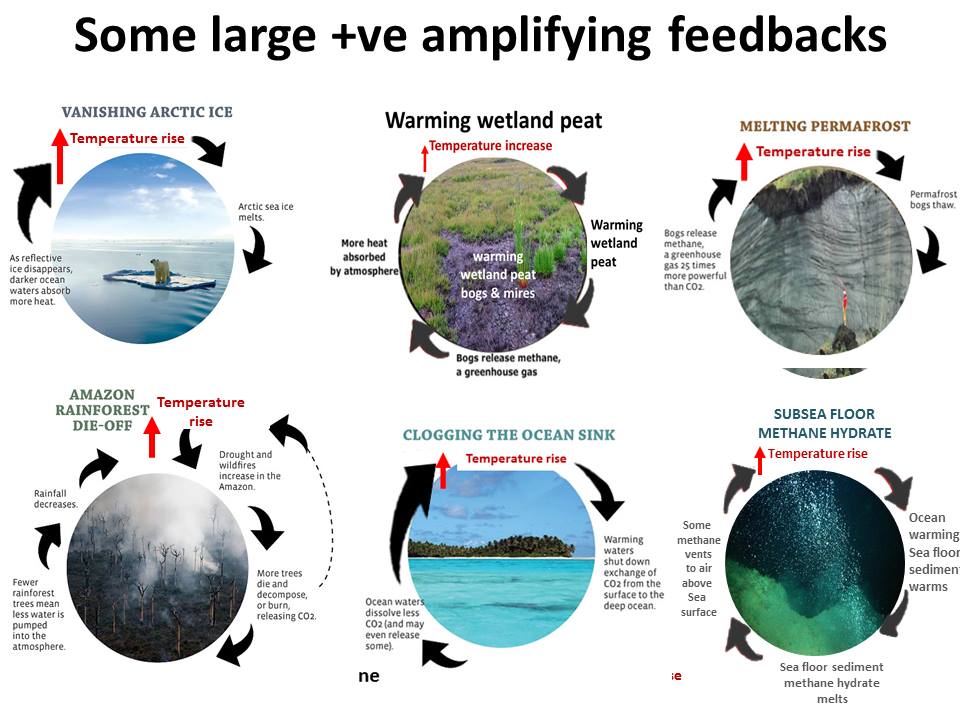
Since 1950, more than 90% of the excess heat our carbon emissions that have been trapped in the atmosphere, has gone into the oceans. As a result, their surface temperature has increased by 1C in just the past 35 years.
That puts the water,that much closer to the limit of what coral can bear. Then, when a surge of even warmer water comes through – often as a result of the irregular El Niño cycle – corals over large stretches get stressed, bleach and die.
So well understood is that mechanism, that satellite data on water temperature is a good proxy for coral bleaching. Using that understanding, the US National Oceanographic and Atmospheric Administration looks at satellite data and produces “bleaching alerts” that represent a predicted stress response from coral.
In data produced exclusively for the Guardian by Mark Eakin, head of Coral Reef Watch at Noaa, we can now reveal exactly how much stress ocean temperatures have been impacted the Great Barrier Reef over the 34 years that satellite data has been available.
Since 1982, just after mass bleachings were seen for the first time, the data shows that the average proportion of the Great Barrier Reef exposed to temperatures where bleaching or death is likely, has increased from about 11% a year to about 27% a year.
Looking at the data, Eakin says a clear trend that hadn’t been quantified before is upon us. “In seeing that what it immediately showed was that there was a real background pattern of increasing levels of thermal stress.
Combined with other stressors hitting the reef, this is having a devastating impact. Over that period, half the coral cover on the Great Barrier Reef has been lost – and that’s before the mass bleaching this year has been taken into account.
That data has limitations – it’s not direct bleaching, but stress inferred from temperature readings. And it lumps extreme levels of stress – like what is being seen around Lizard Island now – with anything that is expected to cause mortality.” End quote from Jack Williams.
Richard Vivers, The Ocean Agency: “It’s one of the largest die-offs in History“. Within the Guardian article below, be sure to watch the two embedded videos which are shared there: The Great Barrier Reef A Catastrophe Laid Bare




 Kevin Hester