‘Nothing short of a minor miracle’: ‘Rusty treasure’ found in the Danube is full of 2,200-year-old iron bars that could equip an entire army with weapons.
“Archaeologists in Austria have analyzed a collection of 500 iron bars that were likely lost in a Danube shipwreck 2,200 years ago.”
“It is nothing short of a minor miracle that the largest mass find of prehistoric iron bars in Europe did not end up at scrap dealers,” Peter Trebsche, an archaeologist at the University of Innsbruck in Austria, said in a statement.” From the following embedded article: Nothing short of a miracle
As our non-linear catastrophe unfolds there is lots of debate as to how much heating we have triggered since ‘Pre-Industrial’, an incredibly vague and shifting baseline. Enough iron bars to equipe an army is a shit tonne of emissions ignored, and this is just one example.
The corporate construct IPCC uses 1850 to 1900 as their preindustrial starting point, they deliberately ignore thousands of years of industrial scale emissions. Not only are the corporations lying to us, so are the NGO’s pedaling hope and fake stats. Their corporate structures rely on monthly donations; their corporate structures corrupt them, and no one wants to admit to the youth that we failed them so miserably, so what do they do? Keep lying.
In the wonderful documentary below we get to see the scale of engineering, smelting and ‘civilization building’ that all had industrial processes underway thousands of years ago.
Every Dark Age Began the Same Way — Historians Found the First Thing to Disappear
“Between the 13th and 11th centuries BCE, most Greek Bronze Age Palatial centers were destroyed and/or abandoned.” ” A sharp increase in Northern Hemisphere temperatures preceded the collapse of Palatial centers, a sharp decrease occurred during their abandonment. Mediterranean Sea surface temperatures cooled rapidly during the Late Bronze Age, limiting freshwater flux into the atmosphere and thus reducing precipitation over land. These climatic changes could have affected Palatial centers that were dependent upon high levels of agricultural productivity. Declines in agricultural production would have made higher-density populations in Palatial centers unsustainable. The ‘Greek Dark Ages’ that followed occurred during prolonged arid conditions that lasted until the Roman Warm Period.” The influence of climatic change on the Late Bronze Age Collapse and the Greek Dark Ages.
The Early History of the Kilns: 8000 – 6000 BC
The first kilns date back to approximately 8000 BC. Originating in the Near East, early kilns were pit fire kilns – consisting of holes or trenches dug into the earth. Wares, placed in these pits, were surrounded and covered by wood or other combustible material. A Complete History of Kilns
Ignoring thousands of years of industrial scale emissions was and continues to be insane!
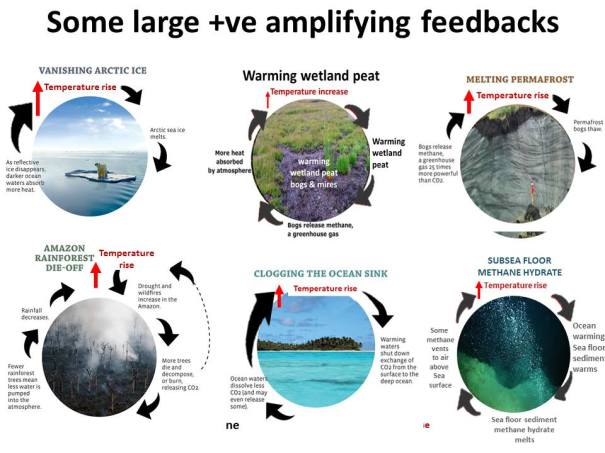
A microcosm of “our collapsing civilization”, which is now unfolding in a non-linear, exponential fashion, as the six-dozen feedback loops we have triggered and ignored, kick in and kick us and all other earthlings, towards oblivion, and extinction. The corporate controlled and created IPCC use 1880 as their “Pre-Industrial Base line”. It’s morally and scientifically bankrupt, disingenuous and fascist when we know that the outcome of these obfuscations is so catastrophic, not just for us, but for all complex life on our “Pale Blue Dot“. The influence of climatic change on the Late Bronze Age Collapse and the Greek Dark Ages
“Tragedy struck Nepal and China this Wednesday when a maelstrom of water, rock, and mud erupted down a Himalayan river valley, sweeping away countless houses, bridges, roads, and people—and burying many more under a viscous slurry.” Nepal’s Glaciers Will Flood Again. Can Scientists Predict the Next One?
“The Himalaya is one of many places around the world home to glaciers that are increasingly becoming unstable as the planet warms.”
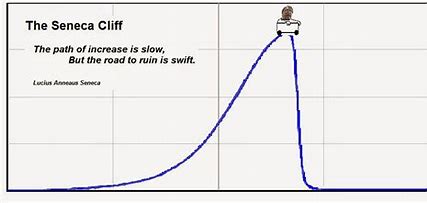
As our climate catastrophe accelerates, and accelerating it is, that is possibly the single most important detail of our predicament, ongoing faith in this set of living arrangements will progressively erode, until we reach a tipping point when it will collapse, the Seneca effect if you will. Capitalism is a confidence game, as long as people are confident that tomorrow will be similar to today and that presenting a plastic card at the supermarket continues to fill your fridge, pantry and fuel tank, people shrug off the looming shortages or disasters, until it affects them directly. Everyone who lived in that valley the day before the collapse were just like you and I, now their lives have either been extinguished, or altered forever. 10’s of thousands, perhaps hundreds of thousands have been traumatized. My dear friend and neighbor Jude said, “I can’t stop thinking about it”, multiply that thought by the millions across the planet. Every adolescent on the planet is pondering their uncertain future. As I have said previously there is a tsunami of grief building in our youth.
Everyone you see running from the tsunami of water and debris field below is now dead. At one point the flow was travelling at 150km /hour, try outrunning that. It flowed, cascaded and destroyed everything in its path for 80km’s. This catastrophe is not over, it’s just begun. According to Red Cross estimates 90,000 people have been affected.
“Climate change accelerates the extensive retreat of glaciers, leading to the widespread development of glacial lakes. A holistic picture of the spatial distribution of glacial lakes worldwide is a critical base for tracking the outburst hazards. By employing a semi-automated mapping approach and rigorous quality control, this study inventories 117,352 glacial lakes”. Source: A spatially constrained remote sensing-based inventory of glacial lakes worldwide
Now everyone who lives ‘downstream’ of those 117,352 glacial lakes are looking up, wondering when it will be their turn.
Nepal is not a wealthy nation (is there such a thing anymore as a wealthy nation, all I see is Himalayan sized mountains of debt globally), fixing the infrastructure that has been destroyed will cost hundreds of millions, perhaps billions, that Nepal doesn’t have. Repairing infrastructure after natural disasters is spectacularly expensive and it doesn’t ‘add value’, the expenditure just gets you back to where you were before the ‘event’. This is a continuum across the planet. One benefit of having China as her neighbor is that there is no better nation at infrastructure construction than China, I’m sure they will help out.
I have previously delved into the issue of losing our glaciers, in conjunction with my friend and colleague Professor Guy McPherson. “The retreat of the planet’s glaciers is one of the most visible and dramatic indicators of the far-reaching impact of climate change on world’s ecosystems.”
Worldwide War is underway and relentlessly gaining momentum, it’s an infinitely worse predicament than WW3 would be, nowhere, no one, no species, not an inch of the ecosystem is being spared. In her recent film “Earths Greatest Enemy” Abby Martin pointed out that the USA has something like 1000 offshore military bases, as the hegemon becomes more unstable, psychotic and financially insolvent they will attempt to bomb their way out of debt and decline. FTR, Russia has nine offshore bases, China one, China hasn’t dropped a bomb in anger since 1979, spot the hegemon.
NATO’s expansionist project in Ukraine, funded by US taxpayers to the tune of $5 billion according to the arch neo-con Victoria Nuland, is by default a declaration of war on Russia, at least that’s how Russian patriots see it.
Sergei Lavrov describes the USA as being “Agreement Incapable”, spot on as always. Imagine what it’s like for scholars like Lavrov, Putin, Xi and Ayatollah Khamanei dealing with the morons at the Orwellian named Department of War. Sergei Lavrov is Right: America is ‘Agreement Incapable’
More laser guided insights in the video below from the indomitable Pepe Escobar and Larry Johnson. Pepe’s linking the bombing of Iranian infrastructure to being an attack on China’s Belt and Road Initiative and the nascent BRICS association is spot on! John Pilgers: “The Coming War on China” gets closer by the day.
The subject of the USA’s Strategic Petroleum Reserve potentially running out in August shows what a spectacular ‘own goal’ the war on Iran has evolved into.
If I was in the West Asia resistance, I’d be liaising with Ansar Allah in Yemen to close the Red Sea access to the Empire of Chaos’s ships, thereby tightening the noose on the Western Powers Economies. We deserve it for not protecting the people of the region.
When DJT murdered the Ayatollah, they murdered the spiritual leader of over 200 million Shia Muslims, no different than bombing the Vatican and killing the Pope.
DJT murdered the single most anti-nuclear leader in West Asia, his son will be much more pragmatic than his dad on the issue of having nukes!
Iran has just staged the largest funeral in human history, revenge will be a dish served cold but served it will be, they have yet to avenge the murder of General Soleimani who was assassinated in a Baghdad airport whilst flying to peace negotiations. Larry said that 45m people attended the funeral of the Ayatollah.
At the 22minute mark below Pepe speaks of a quantum change being laid out by the new leader. Pepe says that if Iran is attacked again, they will formally leave the Nuclear Non-Proliferation Treaty.
Decades of nuclear negotiations have gone up in flames that were lit by DJT and the nuclear armed psychopath Benjamin Netanyahu. Both of them are bombing the cradle of humanity to divert attention from criminal proceedings underway in the Apartheid state and pending in the USA the minute DJT is evicted from the White House that slaves built.
Transition Protocol is a new YouTube channel from the lads, subscribe to support their great anti-Imperialism.
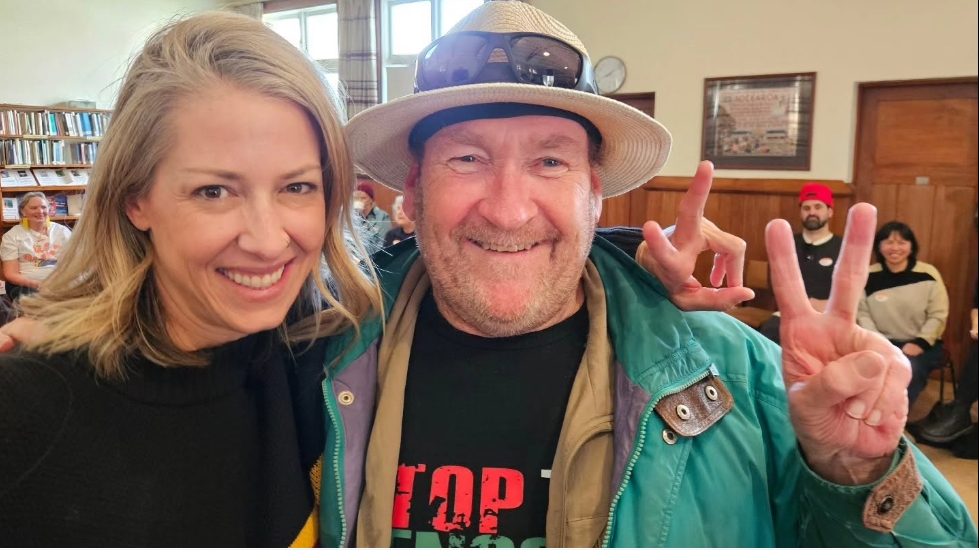
Last week I attended a screening of Abby Martin’s latest feature film “Earths Greatest Enemy”. Abby participated in a Q & A afterwards and I was invited to a ‘Meet and Greet’ with her the following day. Many thanks to my comrade and friend Robert Reid for the invite. We had a great chat, and I got the obligatory photo with her. The synchronicity of us both making a peace sign reflects where we are both at, it wasn’t choreographed, I only realised she had done the same after my friend and comrade David Robie took the photo.
Just like the climate crisis, there is a lag between cause and effect. The partial closing of the Straits of Hormuz has not only triggered an energy crisis, but it has also disrupted fertilizer supplies that will trigger, according to Professor Steve Keen, famines. My beloved Africa will bear the brunt of the suffering. At the very least we’re facing a global recession, much more likely a global depression, potentially a collapse should it spread into the Ponzi scheme of the international banking system that is intrinsically linked to the fiat US dollar. Contagion as David Korowicz describes it.
My maternal grandfather Tommy Byrne was a Quartermaster in the Irish Citizen Army. He was caught with weapons and whilst banged up in a Free State jail he began a hunger strike that lasted 23 days, before he was pressured to call it off. After ‘just’ 23 days his health was forever compromised, he never ate another solid meal, his sacrifice became lifelong, as it was for all of our hunger strikers and their families and loved ones. I have no knowledge of combat operations he was involved in; my parents were reluctant to discuss the armed struggle with me; they didn’t want to put ideas in my head. Ma used to sing Kevin Barry to me as a kid and then got shitty with me when I went to the occupied six counties to assess the war for myself. The first of two war zones I live in, Mozambique was the other, where we were under 24/7 threat from the original Apartheid state on the southern border trying to destabilize the popular revolutionary government in Mozambique. Ma told me that before the Easter uprising Éamon de Valera had been a regular visitor at her parents’ home in Blessington, County Wicklow, after the split he became ‘persona non grata’. “Loved by some, despised by others, ‘Dev’ has left a memory in Ireland that is complicated by many factors. Diarmaid Ferriter assesses the competing perspectives”. What did Éamon de Valera ever do for us? I think granddad Tommy was in the latter category.
When the 1981 hunger strike was unfolding, over seven brutal months of starvation for the 10 brave men and horror for their families and loved ones, I remember Ma walking around the house murmuring “What must their mammies be going through”, Ma knew exactly what emotional turmoil they were suffering. The 1981 Irish hunger strike lasted 217 days, from March 1 to October 3, 1981. I joined Dean Parker on the NZ H Block Committee. Dean put me in touch with wonderful revolutionaries from the Irish Republican Socialist Party with strict instructions to keep me out of trouble. Patsy Marron my host in occupied West Belfast won a poetry price which was presented by the traitor Gerry Adams, I was introduced to him as a “Trusted member of the Irish Republican Diaspora” It was inconceivable at the time to think that someone like Adams could have been ‘turned’ by the Brits, we now know better. Treachery and Perfidious Albion are recurring themes in our struggle.
Now to his O.C. James Connolly Given to his daughter Nora Connolly on eve of his murder by the British
To the Field General Court Martial, held at Dublin Castle, on May 9th, 1916:
“I do not wish to make any defence except against charges of wanton cruelty to prisoners. These trifling allegations that have been made, if they record facts that really happened deal only with the almost unavoidable incidents of a hurried uprising against long established authority, and nowhere show evidence of set purpose to wantonly injure unarmed persons.”
“We went out to break the connection between this country and the British Empire, and to establish an Irish Republic. We believed that the call we then issued to the people of Ireland, was a nobler call, in a holier cause, than any call issued to them during this war, having any connection with the war. We succeeded in proving that Irishmen are ready to die endeavouring to win for Ireland those national rights which the British Government has been asking them to die to win for Belgium. As long as that remains the case, the cause of Irish freedom is safe.”
“Believing that the British Government has no right in Ireland, never had any right in Ireland, and never can have any right in Ireland, the presence, in any one generation of Irishmen, of even a respectable minority, ready to die to affirm that truth, makes that Government for ever a usurpation and a crime against human progress.”
“I personally thank God that I have lived to see the day when thousands of Irish men and boys, and hundreds of Irish women and girls, were ready to affirm that truth, and to attest it with their lives if need be.” James Connolly Last Statement
JAMES CONNOLLY, Commandant-General, Dublin Division, Army of the Irish Republic
This is rare footage of Ireland during times of the 1916 Easter Rising and the Irish War of Independence (1919-1921). It’s amazing for this member of the diaspora to see these clips and wonder was grandad there at the time.
James Connolly’s words reflect his unwavering commitment to socialism, labor rights, and Irish independence.
Notable Quotes by James Connolly
On Revolution and the People: “A revolution is not a bed of roses. It is a battle between the future and the past.” These quotes collectively illustrate Connolly’s vision of a society rooted in equality, workers’ rights, and national liberation, emphasizing that political freedom must be accompanied by social and economic justice. His writings continue to inspire discussions on socialism, labor movements, and Irish history
On Capitalism and Class Struggle: “Governments in capitalist society are but committees of the rich to manage the affairs of the capitalist class.” (Socialism and the Irish Rebellion)
On Irish Independence: “If you remove the English army tomorrow and hoist the green flag over Dublin Castle, unless you set about the organization of the Socialist Republic your efforts would be in vain. England would still rule you through her capitalists, landlords, and financiers.”
On Revolutionary Action: “We believe in constitutional action in normal times; we believe in revolutionary action in exceptional times.”
On Labor and Humanity: “The cause of labor is the cause of all humanity.”
On Social Justice: “The greatest crime is to have a great deal of money and spend it all on just oneself.”
On Nationalism and Socialism: “The Irish revolution must be a socialist revolution or it will fail.”
On Courage and Defiance: “If you strike at, imprison, or kill us, out of our prisons or graves we will still evoke a spirit that will thwart you, and perhaps, raise a force that will destroy you! We defy you! Do your worst!”
On Education and History: “The task of the present is to teach the lessons of the past.”
On Freedom of Thought: “There can be no real freedom without the freedom to think, and no real freedom to think without the freedom to speak.” Source: Memorable James Connolly Quotes
Another famous and fabulous revolutionary in their ranks was Constance Markievicz: “I do wish your lot had the decency to shoot me,” Irish rebel Constance Markievicz told her British captors, when informed that they had commuted her death sentence.” Constance Markievicz: A revolutionary Irish woman history forgot
Women have played an integral role in our struggle for independence and reunification of the 32 counties. There is no revolutionary movement in history where woman didn’t have a crucial role. “The year 2014 marked the centenary of the founding Cumann na mBan, the Irish Republican women’s organisation. On April 5, 1914, over 100 women attended a meeting of what was to become Cumann na mBan in Wynn’s Hotel, Dublin, presided over by Agnes O’Farrelly. The formation of a Republican women’s organisation succeeded the founding of the male-only Irish Volunteers. The organisation played an active role during the 1916 rising, although it had split less than two years earlier into pro- and anti-Redmond factions.” Cumann na mBan, the Irish Republican women’s organisation.
Records aren’t ‘just’ being broken, they are being destroyed, annihilated, my studies on non-linearity in the climate system continue to predictably show acceleration. The key issue with our predicament, is that it is accelerating.
“Temperatures in the Antarctic climbed above 15C this month, shattering the previous winter heat record for the usually frozen region and raising concerns about the speed of climate breakdown.” Minor detail, it’s supposed to be winter in the Southern Hemisphere, the seasonal sea ice is supposed to be growing, not declining.
“The new winter peak temperature was logged by the Argentinian Esperanza base on the Trinity peninsula on 6 June amid a protracted heatwave, when the maximum daily temperature exceeded zero degrees for three consecutive weeks.”
“Scientists said the high of 15.4C broke the previous record set at the same station in 1998 by 2C. “This is absolutely crazy,” said Raúl Cordero, an Ecuadorian climate professor at the University of Groningen. “It is also about 20C above normal for this time of the year. That is a huge anomaly.”
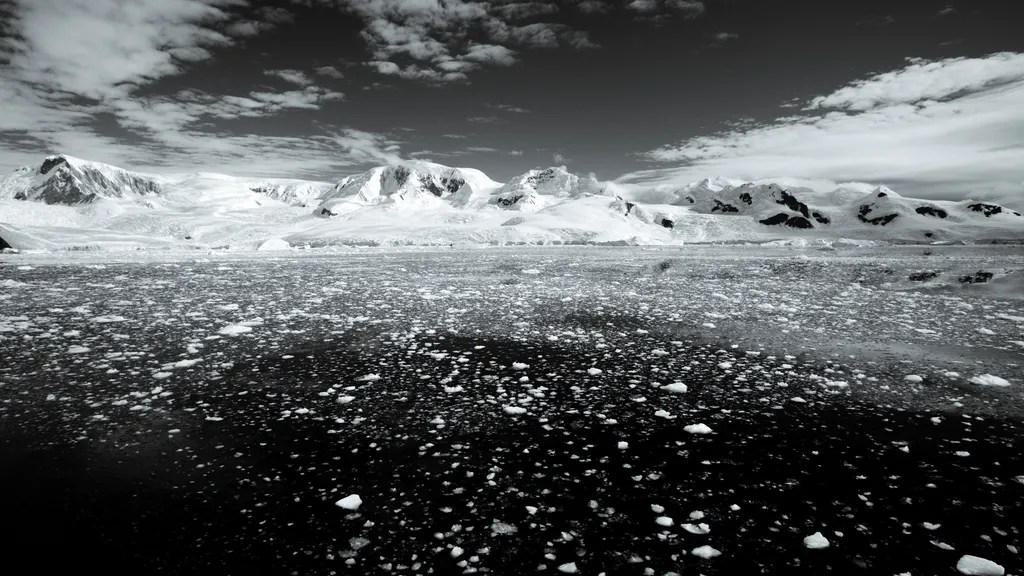
Bellingshausen Sea slushy! Imagine what it will look like at the end of this year as the summer kicks in and the real consequences of the El Niño manifest. 2026 Super El Niño could surpass the 1877 record
“A colossal chunk of sea ice roughly the size of Texas is missing from the west coast of Antarctica, and scientists fear it might never form again.”
“Antarctica is currently in winter, which runs from March to October on the southernmost continent. During the winter months, floating sea ice surrounding the continent typically grows, driving currents that regulate Earth’s climate. But this year, there’s a notable ice gap over the Bellingshausen Sea, on the western side of the Antarctic Peninsula.”
I have noticed a number of articles attributing this melt to the nascent El Niño, I contest that assumption. Here’s one example below:
“The coldest place on Earth is also feeling the effects of the hot weather triggered by El Niño. Scientists recorded temperatures 20 degrees Celsius above normal in early June on the Trinity Peninsula in Antarctica. This shows that a heatwave has gripped the frozen continent.” NOAA have only just accepted that we are now in an El Niño phase, the consequences we witness unfolding are the result of ongoing emissions and the implications of six dozen feedback loops we have triggered, not the El Niño, those consequences are barreling towards us like a runaway freight train. Antarctica feels the heat in June as temperature soars 20 degrees Celsius above normal
What are the consequences of losing a chunk of ice the size of Texas?
1) The loss of latent heat from such a huge piece of the cryosphere. 2) The loss of Albedo or reflectivity means that more solar radiation is absorbed by the oceans, accelerating the melt. 3) The loss of habitat on the ice for seals and penguins, the loss of habitat under the ice for algae, a keystone species in the marine food web. 4) The meltwater from these losses is slowing down the ocean currents.
“Losing the remaining Arctic sea ice and its ability to reflect incoming solar energy back to space would be equivalent to adding one trillion tons of CO2 to the atmosphere, on top of the 2.4 trillion tons emitted since the Industrial Age, according to current and former researchers from Scripps Institution of Oceanography at the University of California San Diego.”
A case study on how a revolutionary movement was defeated from within. Quintessential Perfidious Albion.
On 8 May 1987 I was in the Rock Bar on the Falls Rd in occupied West Belfast, the ‘Rock’ was a hotbed of revolutionary Irish Republicanism, a great place to discuss the military occupation with like-minded souls opposed to the 800-year occupation of Ireland, strategise on how to end it politically and to relieve the stress of living through an urban guerilla war. All this whilst Armoured Landrovers and Saracens drove by with soldiers in their turrets pointing automatic weapons at the bar and patrons. Loud Irish Republican music and creamy Guiness were our accompaniments, along with copious servings of Gallows Humour, all oriented around drowning out important discussions and grief.
Word came in that a large contingent of the East Tyrone Brigade of the P.I.R.A. had been slaughtered in a British “Shoot to Kill” operation/ambush that Brit intelligence had known of since it’s planning stage. They had ten days to arrest the plotters and confiscate the explosives and weapons but chose instead to allow the op to proceed, to give them the opportunity to assassinate the brigade, one of the most feared by the occupying army. A detail I noticed about the young Brits pointing their weapons at us, was that they always looked scared, from the moment they were on duty and when behind the barracks walls, they were ‘on edge’, hence why they were so ‘trigger happy’! The van the ASU were traveling in was hit with 1400 rounds, fired by belt fed machine guns manned by the SAS! It was literally ‘perforated’. A civilian was also killed and another wounded by the SAS after unwittingly driving into the ambush zone and being mistaken for IRA attackers, had the brigade been arrested whilst planning the op, these victims of “The Troubles” would have made it home to their families and been spared the trauma.
Everyone stood in shock listening to the local media gloating at our loss, rivers of tears and more Guiness flowed, revenge was plotted.
A parallel was the murder of three unarmed volunteers shot on the streets of Gibraltar. Sean was shot 18 times. “Farrell, Watson said, “was hit by five bullets to the face and neck and three in the back. . . . Danny McCann was shot twice in the head and twice in the back.” 18 Bullets hit IRA man inquest told. Executed in a public street when they could have easily been arrested. Sprayed with automatic weapons fire from behind, shot in the face and neck whilst bleeding out on the ground. Gone but never forgotten comrades.
“The IRA’s East Tyrone Brigade was active mainly in eastern County Tyrone and neighbouring parts of County Armagh. By the mid-1980s it had become one of the IRA’s most aggressive formations. Members of the unit, such as Jim Lynagh and Pádraig McKearney, advocated a strategy of destroying bases and preventing them being rebuilt or repaired in an attempt to “deny ground” to British forces. In 1985, Patrick Joseph Kelly became its commander and began implementing the strategy. In 1985 and 1986, it carried out two major attacks on Royal Ulster Constabulary bases. The first was an attack on the RUC barracks in Ballygawley on 7 December 1985, in which two police officers were shot dead. The second was an attack on an RUC base at The Birches on 11 August 1986. In both attacks, the bases were raked with machine-gun fire and then severely damaged with homemade bombs. In the attack at The Birches, they had breached the base’s perimeter fence with a digger that had a bomb in its bucket; it was planned to use the same tactic in an attack on the lightly manned Loughgall base.” The paragraph above: Via Wikipedia
In the video above Volunteer and my esteemed friend and comrade Anthony McIntyre’s name comes up as the instigator of the incredible Boston College Tapes. ‘Macker’ has documented much of our history, the good, the bad and the ugly, at his website: The Pensive Quill.
Steaknife was the cover name for Freddie Scapaticci, a MI6 agent that had unbelievably been appointed as head of “Internal Security” of the IRA, even after doubts had been raised with McGuiness, Adams and the Army Council as to his integrity/loyalty. Now we know why: Adams and McGuiness had been ‘turned’. In hindsight we now know that all these people were colluding with the Brits, they had been since they allowed 10 brave men to starve themselves to death in 1981, whilst plotting surrender. How and why, they turned against the ideals of the struggle, and their erstwhile comrades can’t be known for certain but large sums of money, an amnesty from trial and in Adams’s case, committing a crime by covering up his brother’s pedophilia, could well have played a role. A crucial detail about Adams knowing about his brother’s pedophilia is that he allowed it to go on for years, sickening complicity in the crime. I joked on social media that had I known that Adams was a ‘tout’ on the few occasions I met him, I would have stabbed him in the throat! BAM, suspended, cry me a river. Regrets, I have a few. “Gerry Adams has told the trial of his younger brother that during a meeting between the two men 13 years ago, Liam Adams admitted sexually abusing his own daughter.”
“He said: “I had a long walk with Liam. We had a number of conversations. During the course of that, he acknowledged that he had sexually abused Aine. He said it only happened the once.” Source: Gerry Adams: Brother Liam ‘Admitted Sex Abuse’
Let’s now dive deeper into the exposure of “Steaknife”
“Seamus continues his story at the point where he is caught and arrested by the RUC for a job gone-wrong. He tells us about the physical and mental torture inflicted by the prison guards in Long Kesh (H Blocks) and the lengths that Seamus and his colleagues went to during the “Blanket Protests” or ‘Dirty Protests”.
“Seamus describes the inhumane methods employed by the guards to break the IRA prisoners and end their fight for political-prisoner status during his 10 year detainment in Long Kesh.”
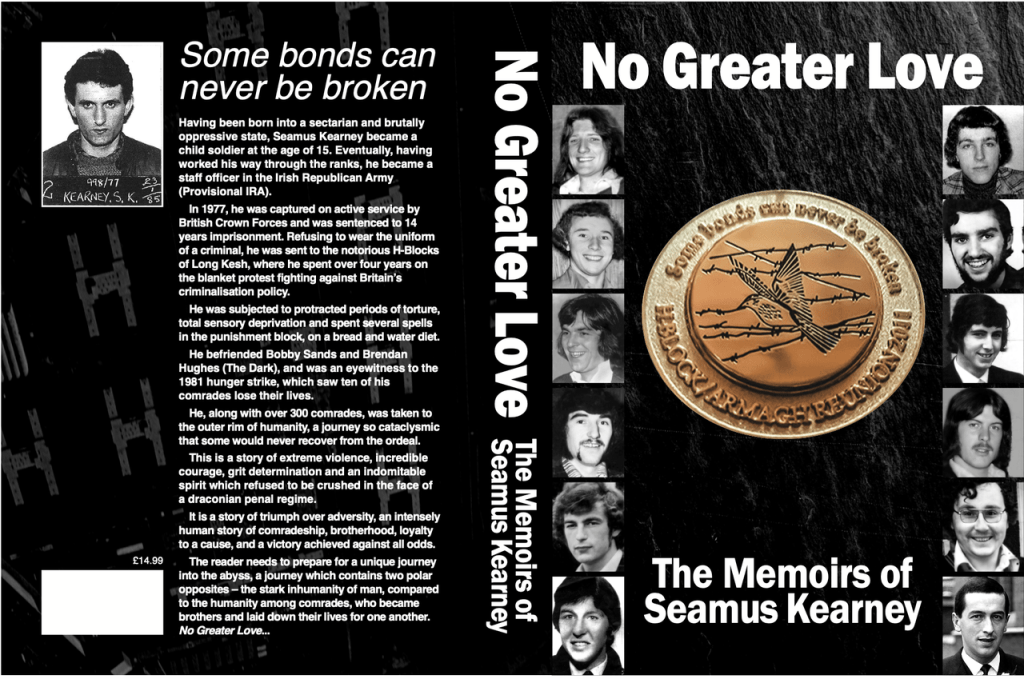
“He shares the tragic story of how his brother, Michael, was falsely labeled an informant after being interrogated by the IRA internal security unit which included the now-infamous British agent Freddie Scappaticci, better know as “Steaknife”. This began a decades long journey by Seamus to clear his brother’s name and expose the British Intel handlers who he believes are responsible for planning and orchestrating his brother’s stitch-up in order to protect their own informants within the Provos. Seamus reveals new uncovered internal IRA documents from that he says will expose the “dirty-war” methods of British Ministry of Defence.” The three paragraphs above from this podcast interview with my friend and comrade Séamus Kearney: H-BLOCK TORTURE, CLEARING HIS BROTHER’S NAME & EXPOSING STEAKNIFE’S UNIT| Seamus Kearney’s story Part 2/2
Just digest those last few paragraphs, what Seamus and his family went through and what former comrades were learning about the treachery in their midst. One shining light in the darkness was that Seamus cleared his brother’s name whilst his mum was still alive. Antoin O’Hara found me on Facadebook not long after I went public about Patsy O’Hara Place in Auckland, I was told it brought Peggy, their long-suffering mother enormous joy that her sons sacrifice was immortalized in Aotearoa NZ. I didn’t get much right, but I nailed that one!
In the above podcast Seamus mentions discussing the corruption in the Belfast brigade with Brendan Hughes, known by the name afforded him by the Brits: “The Dark”. “What the IRA and Sinn Fein have done is just become another middle-class party and dropped all the things we fought and died for.” Brendan Hughes speaks openly about Sinn Féin It pains me enormously that I wasn’t around to support The Dark in his hour of need. I will write a new article about “The Dark” in the near future.
Below are two interviews where Seamus discusses his mission to clear his brother’s name and expose the corruption in the P.I.R.A. Consider the dudes courage, after many years on ‘active service’,10 years on the blanket in Long Kesh, then he dedicates his life to clearing his brother’s name, exposing the collusion between the Brits and the P.I.R.A. Army Command. I live in awe of the courage of my comrades, way too many to single any one in particular, but this story is one of the most important in our fraught history.
H-BLOCK TORTURE, CLEARING HIS BROTHER’S NAME & EXPOSING STEAKNIFE’S UNIT| Seamus Kearney Part 2/2
EX-IRA MAN EXPOSES Ministry Of Defence | Operation Kenova, Stakeknife & IRA INTERNAL FILES uncovered
“The Greatest Shortcoming of the Human Race is Our Inability to Truly Understand the Exponential Function” Professor Albert Bartlett.
“It’s been a record-breaking day for temperatures across much of the UK today. The first came before the sun was even up, with a provisional new May high for the overnight temperature 19.C in Kenley, Greater London. Early this morning our weather team predicted a “bonkers” day – they knew the record for hottest May day would be broken “easily.” And sure enough, the old record 32.8C, set in May 1922 – was equalled around midday. But the temperature kept rising, with the previous May record broken by a full 2C after a high of 34.8C was measured at Kew Gardens, west London, late in the afternoon.” UK records hottest ever May day as temperature climbs to 34.8C in west London
34.8 C record in Britain, it broke the old record by 2c. A quantum leap. If this margin happened in an Olympic event, you would rightly think that the runner was on “The Juice”, you’d be right, our climate system is responding to destabilisation and the consequences of the cumulative effects of having triggered over six dozen feedback loops that I am aware of, there has to be more yet to be identified.
I worked in the not very United Kingdom in 1986/87, a 25C day in the summer was considered hot, summer hasn’t started yet, it’s still a month away and the consequences of the nascent El Nino have yet to manifest. 2026 Super El Niño could surpass the 1877 record All of the above information is from the first embedded link via the BBC, an organisation renowned for giving us the ‘edited highlights’ of events but the data is readily available.
“For late May, this is a historic, record-shattering heatwave. An extraordinary thermodynamic plume sends a massive core of extreme warmth over Spain, Portugal, Ireland, the UK, France, and Germany. Temperatures are soaring by 12-16 °C above long-term climatological norms.“Heat Dome Update: Europe Braces for Record-Breaking Late May Heatwave
Below is a fascinating video documentary on the heatwave from “The Outer Layer.” “A thermometer in a London garden just read thirty-four point eight degrees Celsius — and with that single number, Britain recorded the hottest May day in its entire history. But the number itself is not the signal. The margin is. This record did not creep upward by the tenth of a degree that records normally move by in a centuries-long dataset. It shattered the previous national May mark by a full two degrees, a leap into territory the month had never reached in the entire instrumental era. The Met Office said something stranger still: that this level of heat would be exceptional in the United Kingdom even in the height of summer — and it arrived at the very end of May, with the warm season not yet begun. So is this a freak, a hot day the summer will quietly forget? Or the first move of a machine that is already assembled, already running, and weeks ahead of schedule?” Britain Just Recorded Its Most Extreme May Heat in History — And It’s a Warning For the World.
“The last time the tropical Pacific ran this hot, millions of people starved. The El Niño of 1877 triggered crop failures from India to Brazil and is considered one of the deadliest climate events in recorded history. Now, three of the world’s most authoritative climate forecasting centers are converging on a signal that has not appeared with this level of agreement in modern meteorology: a Super El Niño that could match or exceed that catastrophic benchmark before the end of 2026.” Super El Niño could surpass the 1877 record — every major forecast model now shows 100% probability
“A developing El Niño could bring more than shifts in seasonal storm tracks as humanitarian officials are warning that a possibly strong event could disrupt food production, water supplies and fisheries in vulnerable regions around the world.”
“A historic super El Niño occurred from 1877 to 1878. A NOAA paper found that the 1877/78 super El Niño may have been one of the strongest such events on record.”
I’ve been anticipating this El Niño since 2023, the time of consequences beckons. At the link below Professor McPherson and I discuss the implications the El Niño on the Arctic Sea Ice minimum that usually occurs around mid-September.
Professor Steve Keen is predicting severe famines due to the loss of fertilizer from West Asia, where Western Barbarians are laying siege to the Cradle of Humanity.
Will the Iran war trigger a global famine? Professor Steve Keen explains the 5 scenarios.
The late, great Michael Dowd and I believe that William Catton’s masterpiece Overshoot is one of the most important books ever written. Mike recorded an audio overview of Catton’s book: William R. Catton, Jr Overshoot – 1
Let’s talk ‘Nonlinearity’. Greenland ice melt has surged sixfold and scientists are alarmed
Date: May 4, 2026, Source: University of Barcelona Summary: “Greenland’s ice sheet is now melting in ways never seen before, with extreme events becoming more frequent, widespread, and intense. Since 1990, meltwater production has skyrocketed, and most record-breaking events have occurred in recent years. Scientists say warming temperatures are supercharging these episodes beyond natural climate patterns.” Greenland ice melt has surged sixfold and scientists are alarmed
“Losing the remaining Arctic sea ice and its ability to reflect incoming solar energy back to space would be equivalent to adding one trillion tons of CO2 to the atmosphere, on top of the 2.4 trillion tons emitted since the Industrial Age, according to current and former researchers from Scripps Institution of Oceanography at the University of California San Diego.” “At current rates, this roughly equates to 25 years of global CO2 emissions.” Cascading Consequences of the Loss of Arctic Sea Ice
Via Environmental Coffeehouse “William Catton was prescient enough to see what was coming from a long way off, and responsible enough to spend his life warning us. Peace on his soul, and heaven help our own.” ~ Alan Weisman
“William Catton was a pioneering world leader in dealing with environmental issues. He was one of the few sociologists who recognized the existential nature of the crisis now facing civilization. ” Paul Erlich
Abstract
“Many subsystems of the Earth system, which are currently closely following a stable state, are at risk of undergoing abrupt transitions to a drastically different, and often less desired, state due to anthropogenic climate change. These so-called tipping events often present severe consequences for ecosystems and human livelihood that are difficult to reverse. Forcing a nonlinear system beyond a critical threshold that signifies the onset of self-amplifying feedbacks constitutes a possible mechanism for tipping”. Uncertainty quantification for overshoots of tipping thresholds
“Antarctica is being ravaged by a triple-whammy of climate chaos that has melted sea ice to record lows, a new study has revealed. For decades, the frozen wilderness at the bottom of the world defied global warming trends, with ice levels actually growing—until 2015 when it suddenly reversed.” A brand-new paper just published: Antarctica sea ice collapse driven by triple whammy of climate chaos, scientists find.
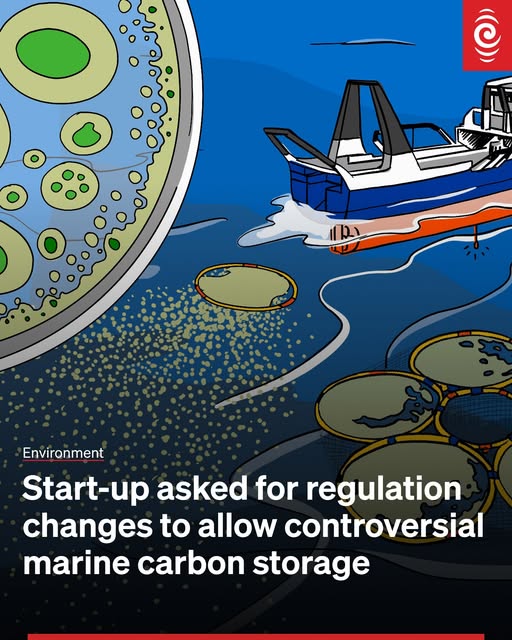
“An international start-up has been pushing for regulation changes to allow it to carry out controversial marine carbon storage in New Zealand waters.” “Start-up asked for regulation changes to allow controversial marine carbon storage”.
“The company says it needs to be able to carry out ocean research to build its evidence base – but wants to be able to generate carbon credits, in order to fund its work.” James Shaw was the corporate stooge instrumental in setting up the “Carbon credits” scam. “It intends to sell carbon credits for the extra carbon it manages to store, and has already signed an agreement with aviation services provider SkiesFifty to sequester 200,000 tonnes of CO2 by 2029.”
“Documents released to RNZ under the Official Information Act show that in meetings with the Ministry for the Environment last year, Gigablue proposed changes to marine regulations that would allow it to go ahead” “without consents. Did the former Climate Change Minister try to pressure the Ministry for the Environment to circumvent the notified consent process?
“The company was assisted in its lobbying by former climate change minister James Shaw!” So, Shaw’s lobbying was contemporaneous with Gigablue wanting to circumvent or bypass the consent process. “However, by 2025 it was looking for a more permissive way to conduct its activities, with an eye to selling carbon credits to businesses wanting to offset their emissions – known as the voluntary carbon market.”
“In a follow-up letter, Gigablue co-founder and chief technology officer Sapir Markus-Alford said the current regulations were “a hindrance” to marine carbon removal, because it was so new that it was not recognised in New Zealand’s system.” My first question is how long has Shaw and Sapir Markus-Alford being communicating generally and specifically were they in contact when he was still in Parliament, pedaling his carbon credits scam?
“In early 2023, the Guardian published an article suggesting that more than 90% of rainforest carbon offsets are worthless. These credits are essentially a promise to protect forests and can be bought as a way to “offset” emissions elsewhere.”
“Morrison has appointed James Shaw as an Operating Partner to its growing team, following his distinguished political career in New Zealand. His Morrison role will be focused on driving the next generation of investment opportunities that support global decarbonisation.”
“Prior to joining Morrison, James served in the New Zealand House of Representatives from 2014 to 2024 and as Climate Change Minister in Jacinda Ardern’s government from 2017 to 2023. The architect of New Zealand’s net-zero framework, he brokered bi-partisan support for the Zero Carbon Act, reforms of the NZ Emission Trading Scheme, and the world’s first Climate Related Financial Disclosures regime, and established New Zealand Green Investment Finance Ltd.”
Kevin Hester is currently living on Rakino Island, a small island in the Hauraki Gulf near Auckland, New Zealand, monitoring the unravelling of the biosphere and volunteering at the Rakino Island Nursery is currently developing a proposal to create a marine reserve near by. The Island has no grid tied electricity or reticulated water. I catch my own water from the roof and generate my electricity from the ample solar radiation on the island.
My Submission to the Ministry of the Environment
Kevin Hester, Dropping Anchor in an Exponential World