
Records aren’t ‘just’ being broken, they are being destroyed, annihilated, my studies on non-linearity in the climate system continue to predictably show acceleration. The key issue with our predicament, is that it is accelerating.
“Temperatures in the Antarctic climbed above 15C this month, shattering the previous winter heat record for the usually frozen region and raising concerns about the speed of climate breakdown.” Minor detail, it’s supposed to be winter in the Southern Hemisphere, the seasonal sea ice is supposed to be growing, not declining.
“The new winter peak temperature was logged by the Argentinian Esperanza base on the Trinity peninsula on 6 June amid a protracted heatwave, when the maximum daily temperature exceeded zero degrees for three consecutive weeks.”
“Scientists said the high of 15.4C broke the previous record set at the same station in 1998 by 2C. “This is absolutely crazy,” said Raúl Cordero, an Ecuadorian climate professor at the University of Groningen. “It is also about 20C above normal for this time of the year. That is a huge anomaly.”
It’s warmer in Antarctica than in the Hauraki Gulf in Aotearoa NZ, the difference from the last record screams non-linearity.
Record winter temperatures in Antarctic raise fears over speed of climate breakdown
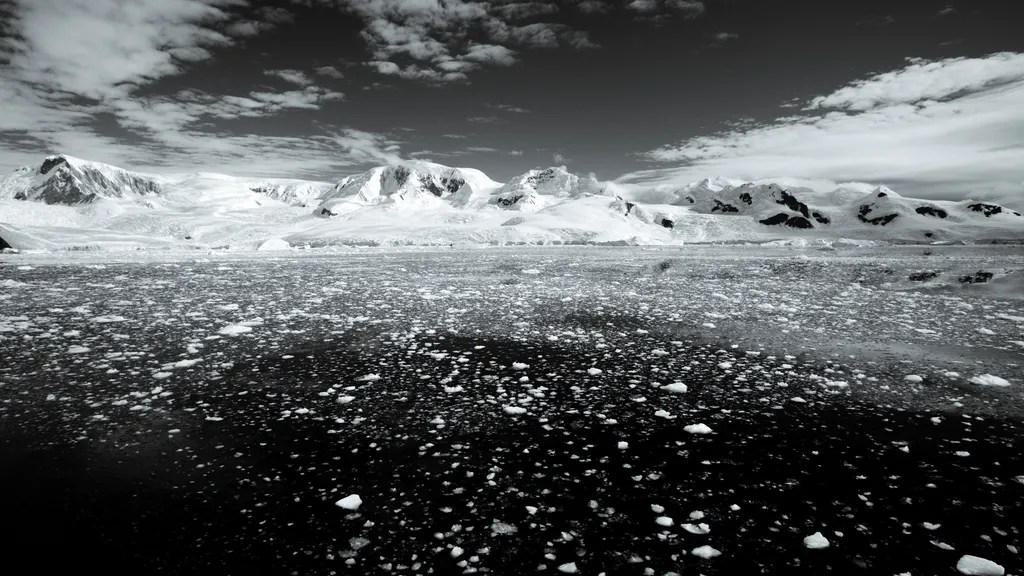
Bellingshausen Sea slushy! Imagine what it will look like at the end of this year as the summer kicks in and the real consequences of the El Niño manifest. 2026 Super El Niño could surpass the 1877 record
“A colossal chunk of sea ice roughly the size of Texas is missing from the west coast of Antarctica, and scientists fear it might never form again.”
“Antarctica is currently in winter, which runs from March to October on the southernmost continent. During the winter months, floating sea ice surrounding the continent typically grows, driving currents that regulate Earth’s climate. But this year, there’s a notable ice gap over the Bellingshausen Sea, on the western side of the Antarctic Peninsula.”
Satellite observations have revealed that around 250,000 square miles (650,000 square kilometers) of sea ice hasn’t formed yet, compared with the average amount of sea ice between 1991 and 2020, The Guardian reported last week. For comparison, the ice gap covers an area slightly larger than France or nearly the size of Texas. A Texas-size chunk of winter sea ice is missing from Antarctica — and it’s probably not coming back
I have noticed a number of articles attributing this melt to the nascent El Niño, I contest that assumption.
Here’s one example below:
“The coldest place on Earth is also feeling the effects of the hot weather triggered by El Niño. Scientists recorded temperatures 20 degrees Celsius above normal in early June on the Trinity Peninsula in Antarctica. This shows that a heatwave has gripped the frozen continent.”
NOAA have only just accepted that we are now in an El Niño phase, the consequences we witness unfolding are the result of ongoing emissions and the implications of six dozen feedback loops we have triggered, not the El Niño, those consequences are barreling towards us like a runaway freight train.
Antarctica feels the heat in June as temperature soars 20 degrees Celsius above normal
What are the consequences of losing a chunk of ice the size of Texas?
1) The loss of latent heat from such a huge piece of the cryosphere.
2) The loss of Albedo or reflectivity means that more solar radiation is absorbed by the oceans, accelerating the melt.
3) The loss of habitat on the ice for seals and penguins, the loss of habitat under the ice for algae, a keystone species in the marine food web.
4) The meltwater from these losses is slowing down the ocean currents.
“Losing the remaining Arctic sea ice and its ability to reflect incoming solar energy back to space would be equivalent to adding one trillion tons of CO2 to the atmosphere, on top of the 2.4 trillion tons emitted since the Industrial Age, according to current and former researchers from Scripps Institution of Oceanography at the University of California San Diego.”
“At current rates, this roughly equates to 25 years of global CO2 emissions.”
Cascading Consequences of the Loss of Arctic Sea Ice
“NASA CERES satellites measure how much sunlight Earth absorbs and how much heat is radiated back to space.”
“The difference is heat accumulation, which has more than tripled!” Via Leon Simons @ Bluesky
Readers can support this blog by Buying me a coffee to be honest, it will be a beer not really coffee or via Paypal :
I’m also on Bluesky, Facadebook and Twitter:
Asalamu Alaikum, Amandla ngawhetu, Tiocfaidh ár lá.

I'm an anti-imperialist, environmental activist and blue ocean sailor, who is passionate about the earth and all it's inhabitants without favour. Brace for imminent impact as we bare witness to the non-linear unraveling of the biosphere and habitability disappearing for most if not all complex life on the only habitable planet we know of. To quote President Niinistö in North Russia: ‘If We Lose the Arctic, We Lose the World’. Folks we have lost the Arctic.


 Kevin Hester
mind boggling heat … 🥵
LikeLiked by 1 person
But wait, there’s always more:
LikeLike
Guy McPhersons analysis of Antarctica falling apart.
Science Snippets: The Catastrophic Warming of Antarctica
LikeLike
Pretty:
https://www.facebook.com/reel/1696669854876105
LikeLiked by 1 person
No one reading the article would conclude that we are in a climate emergency, not so much as a hint of urgency.
Scientific reticence sealed our fate.
Think it’s hot here? The Antarctic Peninsula is unusually warm too – British Antarctic Survey
LikeLike
“Under climate change, the Southern Ocean has been storing warmth which, like your morning jolt, can’t stay there forever, and will someday return to the atmosphere.”
“The next paragraph hits hard: “New modeling suggests that this ‘burp’ of heat — the scientists called it that, by the way — could be abrupt.”
As Guy and I have mentioned recently, the temperature anomalies in the Antarctic are both off the charts and nonlinear.
Records aren’t being simply broken; they are being smashed. Like the potential methane discharge from the East Siberian Arctic Shelf, it’s ready and waiting and could be triggered at a moment’s notice. Dr’s Shakova and Smiletov both said it could happen at any time in 2012, the nascent super El Nino could easily be the trigger.
The speculation based around “In a scenario where humanity eventually reduces its greenhouse gas emissions and then goes ‘net negative,’” has zero credence, as long as the infinite growth on a finite planet paradigm continues emissions are only going up.
One final point, the six-dozen feedback loops we have triggered don’t even get a mention.
Pretending something doesn’t exist, doesn’t make it go away.
Science Snippets: A Century Long Thermal Burp in the Southern Ocean
LikeLike
Over 2 weeks with a dead computer but it was old and decided to just…not work, Amazed that I got that much use out of a used HP ‘Compaq’ Elite 8100 Series machine to be honest. It was slow and cranky but the hard drive memory was recoverable by my web site guy which is good. I managed to get it out of the machine and sent it to him (he didn’t even want to try fixing it, too old). The computer he built for me is 4x4x1.5 inches with a Terabyte ROM. My shop site is about to go live also but as a WIX store and not an independent. Best I could do with what I could afford as a poor old mostly-retired surfer dude…
But I’m back. No chance I’m going to catch up on what I missed. A couple weeks of no computer let me dry out a bit, read a couple of fun books, fixed a couple things around the house, and completely turned off the Trump voice which was wonderful. Not that the Moron-in-Chief quit his awful ignorant squawking but I didn’t fucking have to hear the idiot.
__
Heavy fire season here, smoke and ashfall, over 40’C/105’F temperatures that don’t end when the sun sets…but do drop after midnight. 47 wildfires burning in Washington State and south in Oregon. Wearing N95 masks not only when I walk into stores but while driving because of the smoke. No AC when I drive (which is rarely at this point) so the windows are down even though the air coming in is stifling anyway.
Welcome to the death of our formerly somewhat stable climate, eh Kevin? The BlowTorchocene Era is fully upon us. You realize that the monster El Nino in the Pacific covers a bigger area than the Moon’s surface? How’s that for a comparison?
__
America’s Climate Free Fall
https://www.counterpunch.org/2026/07/24/americas-climate-free-fall/
__
To Honor Pakalolo, ‘Friends of Gaia’ Present News from Antarctica: Thwaites Update
https://www.dailykos.com/stories/2026/7/23/800073891/community/to-honor-pakalolo-friends-of-gaia-present-news-from-antarctica-thwaites-update-the-doomsday-glacier-is-soon-doomed-scientists-say-with-birches-coolspringbuynott-nb/
__
Wish me luck I don’t get burned out this year because that is all it is now; just luck.
sealintheSelkirks
LikeLike
Guy’s latest essay for the Weekly Hubris delving into the heat waves in Antarctica.
Burning Up at Both Ends – Hubris
LikeLike